Monday, September 25, 2006

Saturday, September 16 Mandu, Views on Binge Drinking

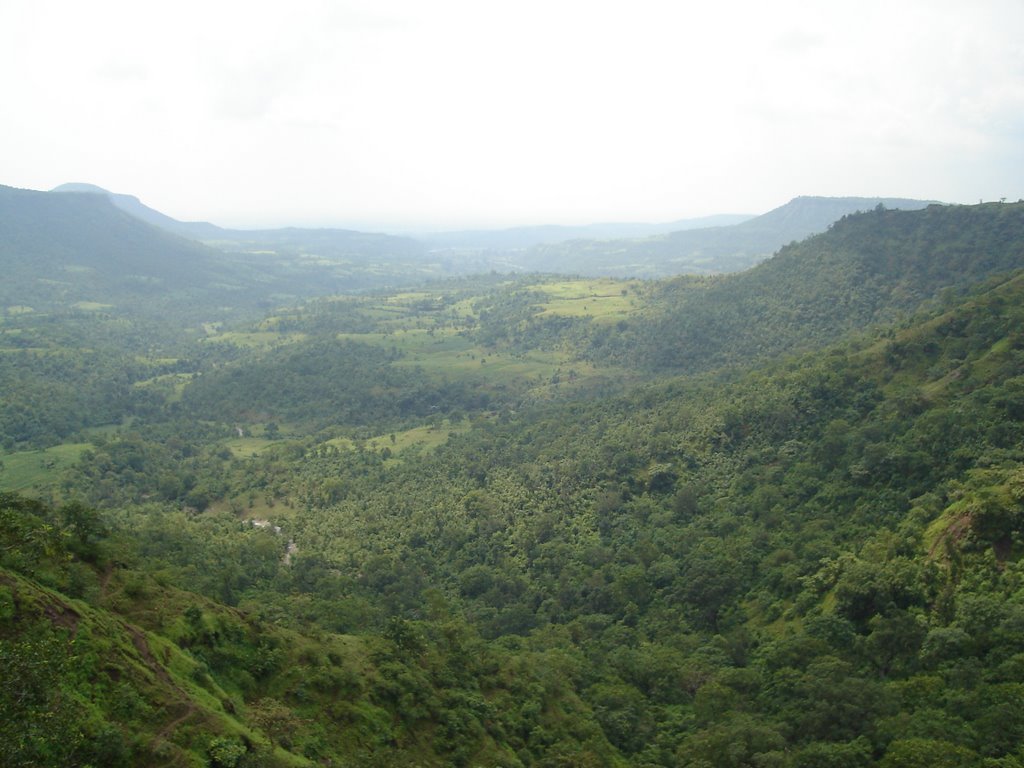
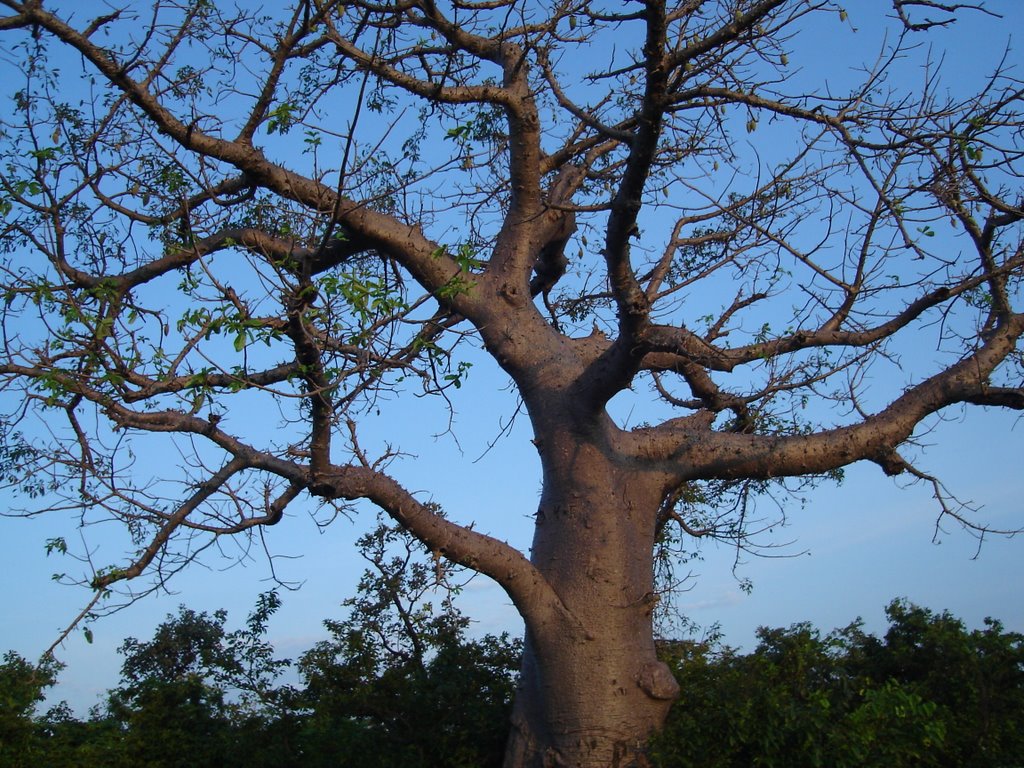
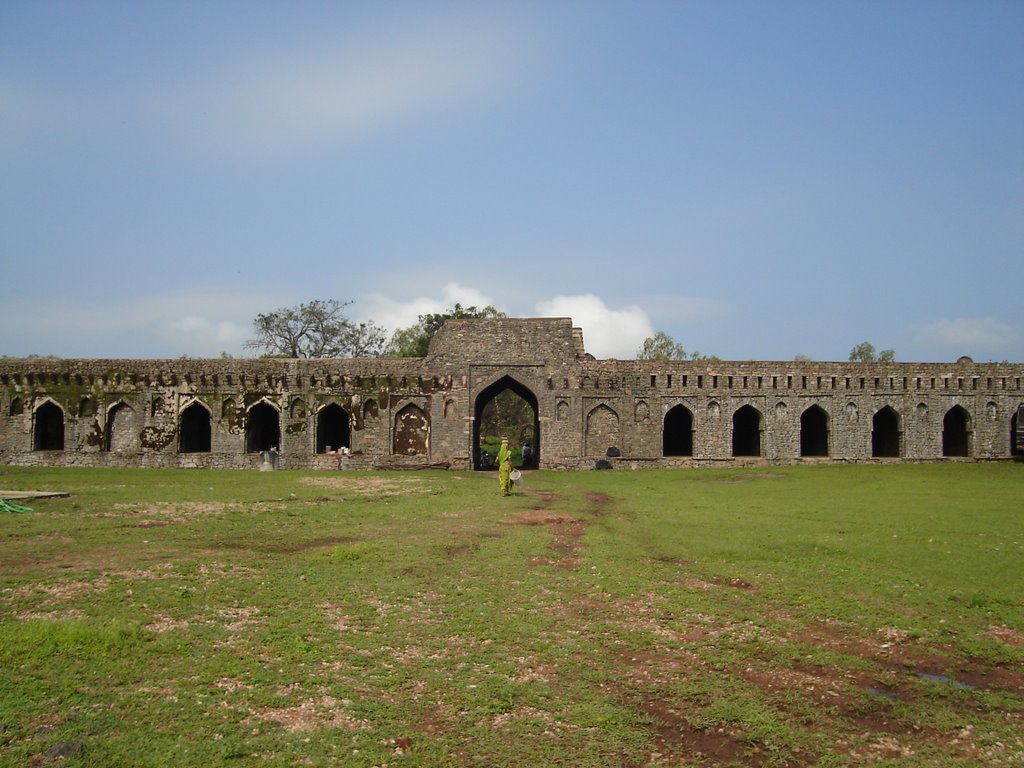
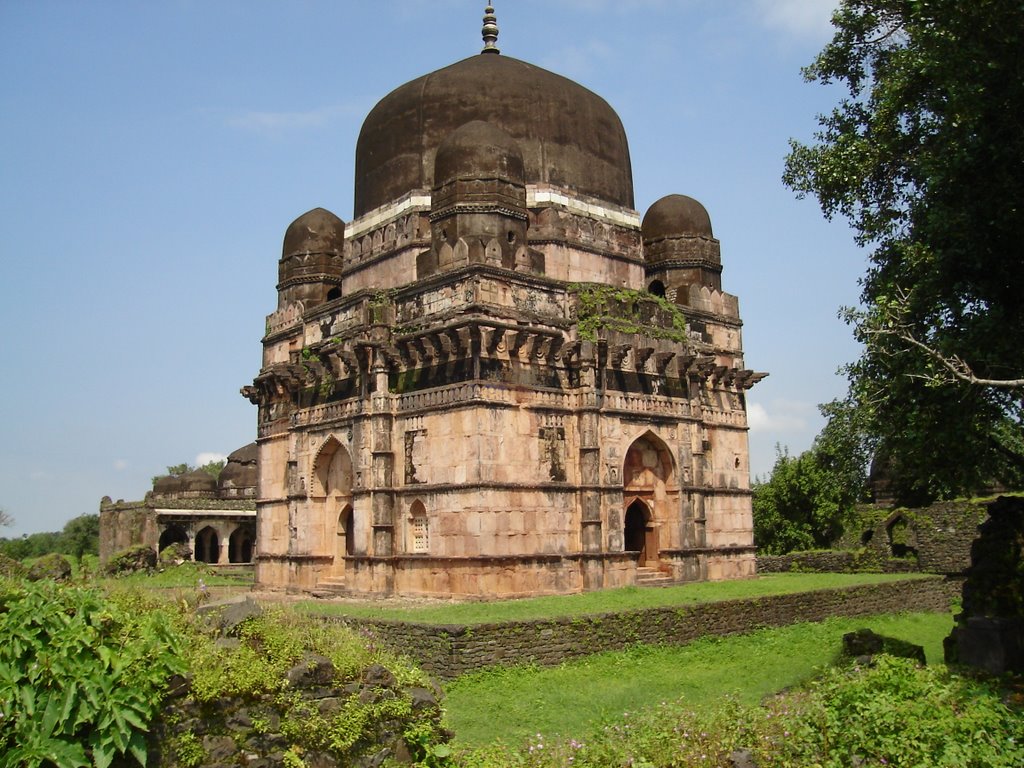
I was referred to visit the Madhya Pradesh village of Mandu by my “History of Architecture” professor, Swati, so I knew it probably would be a good find. Founded as a fortress, it became the capital under the control of Afghan Mughal leader Dilawar Khan of Malwa, in 1401, who erected many of its structures. 100 years later, the capital was shifted to Dhar, and Mandu and its monuments were deserted. I woke up early because check-out time was 8 am, and switched to an even worse hotel down the road, called Tourist Guest House. How could it be any worse, you say? Well, the hotel rooms all had porches with jail-like bars enclosing them. I yelled for a room, and a voice from inside one of the rooms beckoned me inside. I went in and two old men were sleeping in the two beds. Upon my entry they got up, spat in the corner, smoked bidis and threw them on the floor, made the beds, took 125 rupees from me, and vacated the room. The room was disgustingly dirty, had an adjoining room to I don’t even want to know where, and the bathroom reeked of urine and the water ran brown. The beds (that the men spent the night(s) on) were covered in brown sheets (whose natural color was white) and stained blankets, I rented a bicycle for $0.50, and set off to see the town. Mandu was spectacular. It contained a wealth of old ruins, well-preserved palaces and mosques, and a quaint rural village. It was the perfect place to travel in; it was made for tourism and had amenities like running water, electricity, hotels, restaurants, and general shops. However, Mandu was completely empty of any foreign tourists. It was flat, so I could bike to all the major sites, and was situated atop a hill, so the views of the surrounding valleys and plains were breathtaking. Delhi Gate was the main entryway, leading through the village. The village consisted of a one-lane road leading to the bus stand, with mud houses and working people lining the path. The inhabitants of Mandu were mostly rural villagers, fetching water from streams, collecting firewood to cook their vegetables and chapati, washing laundry near the lakes and tanks, and carrying or biking with agricultural produce to sell at the Saturday market. The major sites in town include the Jama Masjid, (large deserted mosque) facing Ashrafi Mahal (the collapsed remains of a college) Hoshang’s Tomb (a marble dome like the Taj Mahal’s little brother, but it’s not even deserving of this title, so I’m going to call it more like the Taj Mahal’s fetus), and Jain Temple (it was empty, so I was playing with the horsehair brush used to worship the gods….sorry). I rode further from the village, and was surprised to see baobab trees, such as those found in Eastern Africa. They were huge silvery century-old trees that the Africans say were flipped upside down, looking more like roots in the air than branches. Exactly a year ago I was probably looking at a baobab tree in Tanzania. What a coincidence. A year ago I was also probably reeking of body odor, staying in a crappy hotel, and writing a novel of a journal. As I rode further south, I passed the calm (except it was rippling because of millions of mosquitoes) lake to the remains of ancient overgrown stone mosques, tombs, inns, and tanks. The only residents were colorful butterflies and birds. It was completely deserted and peaceful, just like Mandu has been for hundreds of years. I walked up a plateau where kids were playing horseshoes and herding their water buffalo. The dirt was bright red and the rocks were of a crystallized quartz-like material. To get to the wall of the fort which afforded magnificent views of the green plains around, I had to walk through a field of mud, completely destroying my baggy pants and Rainbows. As I was walking along the path, complaining of mud and my butt hurting from riding my bicycle, 15-year old married mothers passed me with 50-pound sacks of rice balanced on their heads. Moreover, they laughed when I ran through the grass, scared of nettles, rats, insects, and snakes…Or when I screamed while running through dark corners of ruins, scared of bats, dogs, or ghosts. The buildings all shared an Afghani look to them, with vaulted ceilings, columns, onion domes, and Arabic inscriptions. There was also a Shiva temple, built into a waterfall. Hindu architecture is at its finest when it is not planned, but rather built around nature, such as a shrine built into a mountainside, river, waterfall, or banyan tree. By contrast, Muslim architecture is the opposite; at its finest when its magnificent structures are built around a planned garden. I ate some lunch and bought some horrible earphones that make Dr. Dre sound like Steve Erkil. I came to Jahaz Mahal, meaning “Ship Palace” because it is a royal residence built between two tanks of water. Much of the original structure has crumbled, and boulders lie strewn about on the ground for visitors to touch and stand on. The complex had an extensive network of stone rooms separated by sculpted arches, with well-planned and surprisingly aesthetic drainage systems. The most famous and beautiful was the ornate Turkish bath, a pool with gently curving sides for the king’s harems. It was a huge but empty complex, except for a group of uniformed high school students. It started to get hot, followed by thunder and lightning, so I ran back to my prison cell, euphemized my hotel room. I think the sun is making me get pretty tan and brown (I use the word “think” because it could just be that I’m so dirty it’s an optical illusion and there’s no mirror in the room). In severe opposition to my former (and the general American) attitude, I have decided to forgo trying to tan. I’m going to try and protect my skin from the sun. I think this shift in attitude is just proof that I’ve been in India too long. Maybe it’s the constant bombardment of Fair and Lovely skin cream advertisements. Or maybe it’s the fact that the sixty-year old ladies have such leathery skin they look ninety. Or maybe it’s the fact that not once in Bollywood films, business magazines, or Pepsi ads have I ever seen a dark Indian. Or maybe it’s the fact that in North India all the dark Indians are the laborers and untouchables, while the light-skinned Indo-Aryan Indians are the Brahmins, the educated, the powerful, and the wealthy. However, given India’s obsession with light skin, I have not seen sunblock anywhere in this country. I ate dinner at an upscale (by Mandu standards) restaurant for a Madhya Pradesh favorite, which was so fatty that I felt like my arteries would explode, so I went to a much-better dhaba for 1/3 the price. Vidia and Vijay, two best friends in their twenties, sat and chatted with me for a while, before inviting me into their home. It was a one-room shack with a tarp roof, TV, and about 12 residents. They seemed obsessed with drinking, and they said that every day they drink before going to bed. They offered me some moonshine they keep in a Johnny Walker bottle, which I declined. In India people in rural areas have been known to go blind because of moonshine. I tried telling them that I drink, but not every day and never just one drink. Honestly, though, I really don’t see the point in drinking one drink every day. “But it’s good for your heart”. So is exercise, not eating burgers, fries, doughnuts. “But it helps put you to sleep”. Try actually working for a change….you’ll get tired. Or just go to any economics class at UCSB or “State and Socieity in South Asia” at Delhi University…you’ll get tired. And if you pass out after one drink, what a fun college experience you must have had. As long as you’re drinking, you’re damaging your brain and liver anyways, so you might as well get wasted and blackout. Once again, I love what Santa Barbara has done to me. But it’s amazing, surprisingly at this point I have not had a drop of alcohol since late July. So I’ve been completely sober for two months. It’s not like I don’t like it, but right now I’d rather have a good immune system, and there’s so many other things to do that I don’t really have any desire to drink in India. However, I like India’ attempts to addict the impoverished masses of Indians to alcohol; the White Mischief vodka ad has a beach scene with two white girls scantily-clad, and an Indian man in a constricting Speedo with a thought bubble saying “I’m in the Mood for Mischief….”. Then, another has a picture of a young Indian (looks like Colin Farrell) businessman in a suit and Roman helmet drunkenly yelling, the caption saying “Alexander the Great: Tonight he lives in you”. The alcohol stores are all government-owned, all are in shady back alleys, all look like a black market operation, all have barred windows, and all have the sign “English Wine Shop”. I’m glad that India was de facto colonized by the British and not the United States; the English get the bad rap while Americans really colonize them with Bacardi, Coca-Cola, and Ford. Yay. Vijay walked me back to my hotel, and offered me a present; a large Mandu squash. Yes, as in the vegetable.

Friday, September 15, 2006 Train to Indore, Buses, I'm the Cheapest Man Alive

On the overnight sleeper, I met a middle-aged guy from Indore, the train’s destination. He works for GE in Gurgaon, and said he wanted to visit America. He said he had clients in Alabama, Missouri, Texas, and Vermont that wanted him to come. If he pays $2,000 for airfare and goes only to these places, I pity him. The train ride was long, so I had to use the restroom (luckily they have a Western toilet, the cleaner alternative to the piss-covered Indian-style). Still, it was weird going; it’s still just a hole to the tracks below, and it’s windy from below. Indore is a dirty, dusty, crowded town, just like any other large Indian city. It’s a terrible transition from the beautiful greenery of rural Western Madhya Pradesh. I took a rickshaw to the bus stand, and I didn’t have to haggle over price because the rickshaws here actually use their meters! As I hopped on a bus to Dhar, the landscape changed. The verdant green plains of central India supported an agricultural base of everything from corn to flowers to rice. Pink, purple, and blue saris and yellow turbans punctuated the range of green hues along the way. People here lived simply, and Western dress became common only for men, as Hindu women wore their colorful saris over their faces as purdah, a sign of modesty. Houses were small, and made of mud, tarp, aluminum, and brick. The ride to Dhar was followed by another bus ride. This ride, well, sucked because we had to stop for a flat tire, schoolchildren were figthing around me over seats, and my right headphone stopped functioning. I finally arrived at Mandu, a sleepy town, around six. When I got there it was almost dark, so I set out to find a hotel. In India, it’s always been easy to find a hotel. They are everywhwere, even in the tiniest cities. Apparently Indian people just like opening hotels, as proven by the fact that half of the hotels in the United States are Indian-owned. I looked at one that was $4 a night, but, being the extremely miserly cheapskate that I am, I walked away, refusing to pay a penny over $2.50, which unfortunately meant I had to check into a hotel whose lobby was a Ram Temple, and my room basically a prison cell. In addition, check-out time is 8 am. The doorway had a huge gaping hole in it, so that mosquitoes and wandering eyes could enter at will. The entire night I spent worrying about mosquitoes, lightning, and random people watching me. I admit that I have officially sunken to an all-time low in cheapness and laziness. The extreme excess of labor means I’m so used to people doing everything for me in this country that when I have to do it myself, I just don’t. It seems as if the only time I’m not lazy is when I’m cheap. Take tonight’s case; I’m willing to walk literally a mile to find a cheap hotel, after refusing to pay the exorbitant $4 for the nicer one. This country is so cheap that it’s made me extremely cheap, too. I don’t know whether this is good or bad; I think bad, but whatever. I like having money and don’t like not having it. I’ve managed the impossible, and have become even cheaper than my Asian mom who shops in Oregon to avoid sales tax, or my former roommate Jon Carnes who went out to eat maybe five times all year. I won’t pay more than $4 for a hotel, I will pay $3 maximum for a meal, I will take a 50-hour train rather than flying for $100, in trains I prefer dirty sleeper class instead of sheets and air conditioning, I take the dirty rickety public bus instead of train or taxi, I won’t patronize internet cafes that charge over $0.75 per hour, I won’t call home for $0.10 a minute, and I won’t buy bottled water that costs over $0.25 per liter. In conclusion, if you thought I was cheap then, you should see me now. And I wonder why no one wants to travel with me...

Thursday, September 14, 2006

Thursday, September 24 Class, Delhi-the rape capital, The New (and improved?) Facebook

For the second time in Delhi since my arrival at the onset of the monsoon, it was raining. Equipped with my bumble bee umbrella, I set off for class. As usual, Veena Kukreja class was horrible; this time she sat in a desk facing us and read to us verbatim highlighted parts of someone else’s article. The other class was canceled at the whim of the professor. What’s funny is that Ro and Puran had slept in for the first class, but showed up for the one that was canceled. As for the rest of the people in my house, here’s the deal. Tara and Snehal are always together, both working part-time for an NGO, and at the moment trying to finalize plans for the October break in Western India’s entirety; Gujarat, Mumbai, Goa, and Kerala. Meanwhile, I never see Mariel, Kim, and Alix anymore, who cannot even travel during the two-week October break because they decided to work full-time for an internship for a womens’ rights organization nearby. Mariel has also bought an oversized wooden spoon, which she carries everywhere for protection. Although it’s pretty ridiculous-looking at first, as a man I can’t really say anything. I recently read in The Hindustan Times that Delhi is the most unsafe city in India (and most of the world) for women. Delhi accounts for one-third of the rape cases in Indian cities with population above one million. This means that in Delhi, every 17 seconds a rape case is reported, or a rape case occurs every 29 minutes. They’re not in our house, but I just wanted to touch on it; Alan and Nick both bought scooters, honestly I don’t see why; transportation is cheap and easy in Delhi, and if you didn’t know, Indian driving is well….crazy! For example, on the road at night, one headlight could mean one of five things; a pedestrian, motorcycle, car with a broken taillight, motor rickshaw, a 10-ton semi with a dead headlight…get the idea? Ro and Puran are also connected at the hip, and usually spend their weekends with their families in Punjab or UP. Ro just got like 25 free designer shirts direct from the India factory in Gurgaon where his cousins work, but they’re ALL awkward golf shirts. They always wake up late, prompting Rajesh to ask me, “Do they ever go to class? They’re never awake, so I can’t clean their rooms”. They said they’re considering turning off internet because they don’t talk, and spend four hours a day on Facebook. That reminds me: While conducting my everyday routine and logging onto Facebook, I noticed that recently Facebook has introduced a live news feed, so it tells you exactly what each person’s activity was on facebook. For example, it’s like “Tyler has tagged pictures”, “Tyler has changed his profile picture”. It’s pretty creepy, and almost takes all the work out of stalking people; now it’s incredibly easy. And with all these features, some guy started a petition group saying “Stop the Facebook News Feed”, and in three days it had grown to 750,000 members, and each hour it was increasing by like 50,000 members. Because of this mounting pressure, Mark Zuckerburg (of whom I hate for not accepting my friend request a year ago), had to send out a formal apology that appeared on everyone’s homepage. But basically, this exemplifies the fact that Facebook has enormous power to mobilize people like never before. And I love it, hence the average five hours a day I spend on it. But at least I’m being social….right…? Anyways, as long as they don’t show whose profile you’ve looked at, I see no problem with the new face of Facebook (pun intended). If they do start saying whose profile Tyler Rapp has looked at, then it’ll take all the fun away from stalking, and that’ll be the day that even I, king of facebook, will cease to login. Also from Facebook, Macie told me that Naan Stop (the Indian fast-food restaurant in Isla Vista which I used to patronize at least twice a week) shut down (because I wasn’t there to give them business). Moreover, she had spent like an hour getting the guy to print out a gift certificate (they don't have ready-made gift certificates, because let’s face it, who gets someone a gift certificate for Naan Stop), which is now worthless.

Wednesday, September 13 Sleeptalking, "Move" vs. "Go", Rahul's Party

Apparently last night I was talking in my sleep to Nikhil about the AC not working, and I said (which I don’t remember, and I wasn’t drunk) “Is the AC guy here?” and he replied, “I don’t know when he’s coming”, and then I proceeded to call Tahera of all people to complain to her (unconsciously) about the AC. This could potentially get me into a lot of trouble. But for now, I think it’s hilarious. What isn’t hilarious is the fact that our AC still doesn’t work, so it was really hard to fall asleep last night. We had to open the door because it was cooler outside, so I got five mosquito bites. I went to the dhaba by Sri Ram Road with Ro and Puran, which was filled with butter and fat, but wasn’t good. After an uneventful afternoon of Hindi and being told by the travel agent that they could not book my tickets, I went online for a while. Then I got ready for Rahul Jain, our landlord’s Birthday Party. All of us except Tara all met up in the living room downstairs, and by coincidence all of us wore collared Polo shirts. We mingled with his parents and sister, while the amped Rahul fiddled with the music. The music selection was interesting. Track one was “My Neck, My Back”, followed by “Naughty Girl Remix”, and “Welcome to the Jungle [Euro remix]” We circled around the table, and some of his friends showed up, and so did friends of Palak. Ro and Puran were both going for the one Indian girl there, as usual. Basically everyone was drinking, and the orange juice and pakoras they set out for us were delicious. After some mingling and my consumption of 15 pakoras, everyone sang happy birthday to Rahul, and tradition, his family smearing cake on his face. The cake was also delicious. Then we had a mini dance party in their living room, which had a good sound system, marble floor, and colored lighting like a club. A Bhangra circle was formed, led by the Punjabis, Ro and Puran. We even got Rahul’s fifty-year old but fun parents to get up and dance. What surprised me was the openness between family members; Rahul, Palak, and their friends were all drunkenly dancing to hip-hop in their own living room, while parents smiled and clapped along to the beat. Export the occasion to America, and it would be an awkward, boring, asexual, quiet, and substance-free “party”. After that, we were asked, “Ok, shall we move?” I don’t know for sure why Indians don’t use the word “Go”. I can only speculate that the reason is because “Go” implies you’re going to reach a destination, whereas “Move” just implies that you’re making a motion towards somewhere; the “when” and “if” of reaching your destination is uncertain in India. Our first “Move” was to pile into cars to Connaught Place. I, of course, got stuck sharing a car with a man with no arms, an obnoxious loud Shachi, and a drunk driver. Rahul’s friend Shachi got extremely wasted off three shots and was trying to dance with everyone. The entire ride there he was yelling, hitting people, and just being belligerent, inappropriate, and annoying. I introduced myself, and he thought I said Taylor. He ended up calling me Elizabeth Taylor (but after a while he dropped the ‘Taylor’, so for the rest of the night I was known as ‘Elizabeth’), and because she had eight husbands, he volunteered to be my ninth husband. He taught me how to swear in Hindi, and one of the words he told meant, “One who is born from a vagina”. Being genetically human, I don’t really know how that would be offensive in any way, but apparently it’s an insult here. He kept sitting on me, and kissed me when I remembered the Hindi swear words. WTF. Shachi told me “bush” (pointing at my crotch) was good, but the other “Bush” (the US president) was not good. He adamantly hated Americans, but he said that because I was so different well-adapted to India, I changed his entire opinion about Americans. Too bad he won’t remember that conversation in the morning. I was overjoyed getting out of the car at the club, QBA, a bourgeois bar and lounge. The bar decorations included, by eyeballing it, a 20 gallon bottle of Belvedere. Such a bottle would either be a Santa Barbara student’s 21st birthday wish…or be the tipping point that causes the Santa Barbara student to puke the morning after their 21st birthday. Dimly lit, lots of couches, tables, and Western prices, and Indian hipsters were everywhere. The dinner included pasta, pizza, naan, dal, paneer, and an amazing dessert: brownie that leaked melted chocolate, with coffee ice cream. There was some dancing to random music (no hip-hop, though). The night was really fun, actually.

Tuesday, September 12 Weird Dream, Tailor Troubles

I had a dream that Jordan Bowman (probably because it was his birthday yesterday, the most awkward birthday I can think of) and I were five year-olds, bickering in the back of a Volvo. I tattled on Jordan to the dad, who turned around, as Dave Wolfe. Weird, but I woke up laughing. The AC in our room doesn’t work, and it’s about 97 degrees outside. As I was attempting to take off my t-shirt, I was so sticky that it ripped a hole in my seam. That reminded me that I had sent my pants to the tailor, and I picked them up, folded the next day and paid him, without looking at them. Turns out he didn’t even fix them, so they still had a gaping hole in the crotch for my entire trip this past ten days. It made picture-taking look like I had to constantly use the bathroom. So he finally fixed them and I picked them up today. Everything in India is a process, and never expect everything to work the way you want it to at any given time, because it plain and simple, just won’t. I went to Connaught Place to try and make train tickets for this weekend, and once again, the travel agent attempted to rip me off. So, he reserved for me a ticket to Madhya Pradesh, but not coming back. I’ll have to figure that out on my own somehow; that’s going to be fun. For the second night in a row, I ate at Sarawana Bhavan, and this time had two enormous thali, which were utterly satisfying.

Monday, September 11 Urine, 9/11 Ceremony at US Embassy

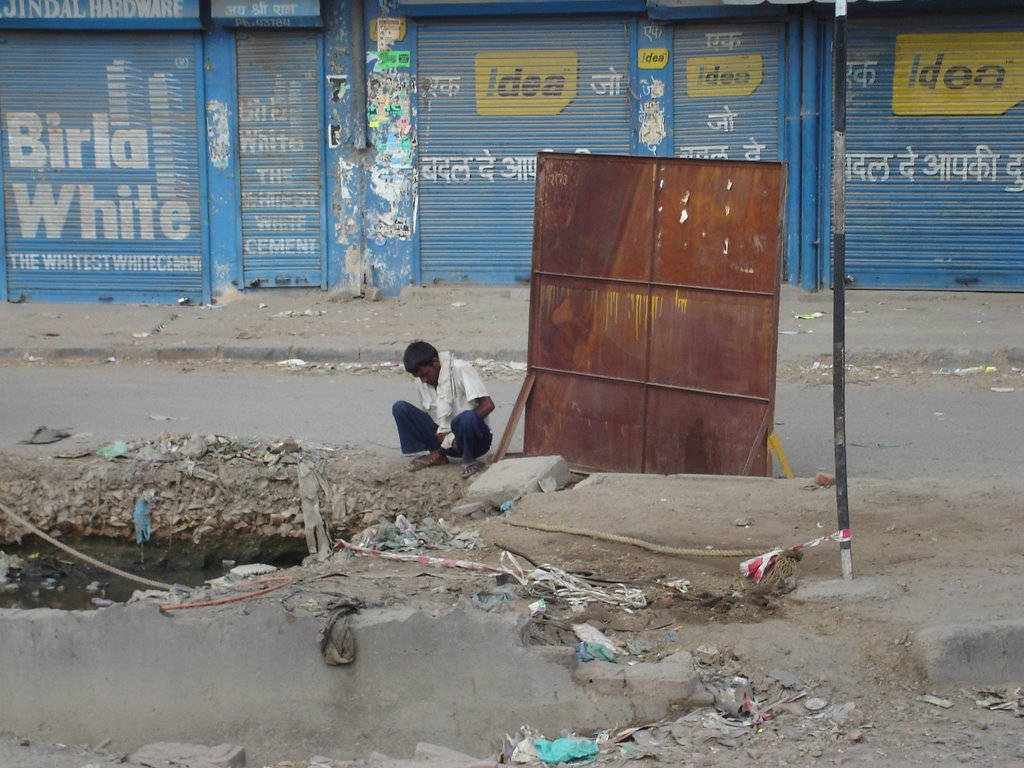
I was peeing on a wall, which is commonly done in India, before I could read the sign saying “Don’t Urine Here” right in front of my face. Oops. What does it imply when you need a sign telling you not to urine here. Basically, walk a couple feet and it’s ok, go ahead. Throw trash anywhere you want, too. If it’s public space, it doesn’t matter. This explains a lot about Indian society, where homes are spotlessly clean, and streets remain dirty. I think this displays a lack of cooperation by members of society. This is seen in books I have read, as it is difficult for many Indians to cooperate in the workplace. Caste, status, and religious differences have historically accentuated these social divisions. This is also apparent because one’s family is paramount and the major support base. This means that within a group, one is accepted, but outside, it’s a dangerous place. Not paying mind to the date (the five-year anniversary of September 11) or my clothing, I didn’t realize until I was walking out the door to Hindi and to get a haircut, I was wearing my joke t-shirt that says: “One Nation; Faith Tested Since 1776; The Nation that Prays Together Stays Together”, with an American flag on it. Plus, I was wearing my cool sailor shorts, which were white and blue stripes. How stereotypical and coincidentally DISGUSTING. I’m surprised I wasn’t terrorist-bombed on the way. I had to change because the US Embassy invited everyone to go for a memorial service, so I wasn’t about to wear basically the American flag to the American Embassy, that’s just too flamboyant. Bob and Sally Goldman drove Nikhil and I to the embassy in Chanakyapuri District of New Delhi. There were roadblocks and literally dozens of guards surrounding the entire embassy compound. We got through security into the courtyard of the ambassador’s residence, a 50’s style building with gold columns. It wasn’t much to look at to be honest. There was a little podium set up that says “The Embassy of the United States of America”, and about fifty chairs set up to listen to the ceremony. I’m pretty sure we were the only four who were not pro-Bush among the entire fifty-person crowd of mostly white Americans. Four uniformed marines presented the colors and lowered the flag to half-mast. The soldier dropped part of the rope, which was not supposed to happen. For my entire life until that point, I have looked upon soldiers as strong, different, able robots in the prime of their lives. However, today I had a realization that they are just people. Actually, they are my peers, and in some cases, maybe even younger than I am. This time, when I saw them making a mistake, they seemed just as human as I, under their spotless black-and-white uniforms and serious faces. I could just as easily be in their position (Bush, along with 60% of the US population would prefer it). However, the only difference was that I am not willing (or obligated for financial reasons) to risk my life to promote a government agenda that I disagree with; they are. The Ambassador to India, a white-haired man in his sixties, gave a five-minute speech, very politically cautious, but nevertheless pro-Bush and country (how else do you think he get appointed to this position, and what do you think the response from the Republican crowd would be like if he told the truth and said “the war after 9/11 on terror is being miserably lost”). He even used the words, “those evildoers who try and undermine our way of life and values must be destroyed” [let’s just bomb the entire Middle East, minus Israel], “we continue to battle for freedom, and we are making progress in the war on terror” [last time I checked Osama bin Laden is still at large and extremist organizations have grown stronger], “five years ago the terrorists failed to tear apart our unity” [that’s why Bush’s approval rating is at 30%-and that’s being generous], and “we must bring the light of compassion, freedom, and democracy to the world” [because American values are always right, and we have a great track record, like Iraq, which lies in shambles and Civil War]. However, he did right in acknowledging the Mumbai bombings, relating that to our lives in India, and how it is a universal struggle to fight terrorism. Afterwards, everyone got to meet him and his extremely made-up wife. I shook his hand, but was more interested in the free unlimited iced tea and lemonade with ICE. It reminded me of Forrest Gump. It was such a yuppie country-club mingling session, everyone desperately trying to make influential connections. Nikhil and I took a look around the building, and we walked across the perfectly-manicured lawn to the pool, and I touched the water, so I could say that I have been in the US Embassy pool in New Delhi. One of the advantages of being in a metropolitan capital city like Delhi is that I, for the first time in my life, have proximity and access to a wealth of national archives, national events, ceremonies, and performances. I am beginning to grow fond of Delhi day by day. After that, I did some errands in Connaught Place, and wanted to eat South Indian thali at Sarawana Bhavan, which was ironic because Nikhil and I saw Tara and Snehal, who independently decided to go there, too.

Thursday, August 31, 2006

Thursday, August 31 Class, The Irony of Rap Songs

Today was an interesting day at class. Besides it being extremely boring, there were some funny moments. In Veena Kukreja’s class she gave a lecture about colonization, so the first thing she said was “Colonization comes from the word ‘colony’, meaning where people live”. Then she said Nepal and Bhutan weren’t colonized because they have “nothing to offer”. She pronounced the year 1605 as sixteen hundred five. Seriously though, how do MA Political Science students not know the basics about Indian colonization that even I know? Moving on, Shanta Verma was late and let us out 25 minutes late, and NO ONE left early. She also yelled at the students in the front row: “I have told you since the first day that I need the fans, so move the desks for me, do you have a problem?” Then she fielded a question, “That is not relevant to this discussion. I don’t want to waste my time while you just pull questions out of the air”. And she apparently hates China and the USA, and considers it "bullshit" if we discount their role in India's defense strategy. During class, fireworks were going off for student elections, in which they give out posters with color portraits of themselves, it’s great. I was listening to some old school rap songs, and realized just how outdated and ridiculous they were. Don’t get me wrong; I love bad rap music, but honestly it’s pretty funny. The list of coveted items includes: Super Nintendo (While I agree it’s the best gaming system, I saw it at a neighborhood garage sale amongst a bunch of used stuff for $20), credit cards (I get credit cards as junk mail…starting at age 16), pagers (needless to say the most worthless invention in the history of the wireless communications industry), mobile phones (I’m guessing 95% of the aged 15-35 population has a cell phone), grills (I think Paul Wall just needed braces and a boon for his jewelry business, so he made up an entire subculture based on the ugliest piece of jewelry since the chastity belt…how else could a fat white Texas man have a number-one rap song in America, oh yeah because believe it or not America is STILL racist), 20” rims (no one brags about 20” rims anymore, now 24” is the rage, and next it’s going to just be “Monster Truck”), Walkman (I’m listening to your song in on an IPOD), Jaguar (Congratulations, your car breaks down every other week), Roca Wear (Who besides Jay-Z actually wears that?). It’s a safe bet to just stay with the following classic rap accessories, these things never get old: Benjamins (unless the value of the US Dollar continues its abysmal downward spiral), hoes (ok I like dark girls, seriously they’re hot), 40’s (all you need is 2 bottles for $2, and it’s a sure ticket to intoxication), fried chicken (you’re thinking only black people like fried chicken…who doesn't like fried chicken...fried chicken is GOOD), diamonds (always a girl’s best friend), marijuana, plastic bags (for distribution of marijuana), Swishers (for rolling of marijuana), pipes (for smoking of marijuana), lighters (for lighting of marijuana), and cocaine. After lunch of a bowl of rice and parantha I packed my stuff and headed off to catch my night plane to Calcutta.

August 30 Sam off to College, Beekeeping, Fasting

It’s actually starting to cool off in Delhi thank goodness. Meaning that the high is 90 degrees and the low is 75. Sam went off to his freshman year of college a week ago in the blistering summer inferno of the University of Arizona in Tucson. He’s been going to some frat parties and meeting people, and he’s been trying to get a job, too. I called him once to talk about it. He had to go to temporary housing because he was late in turning in his acceptance. He’s late…Surprise, surprise. It’s apparently rush and he says that the Sig Ep house seems boring. Oh well. What are my parents going to do now that both of us are gone? When I asked them, they replied, “Relax and party”. It’s kind of like life here. I don’t have any work to do, so all I end up doing is spending money and eating. Today, I wasn’t as sick, but I wanted to take it easy. I left the house once and that was to pick up my laundry. I talked on AIM and Facebooked, and cleaned up my music files. There was a swarm of hornets in our kitchen, which was inhibiting us from cooking. So, Ro got dressed in a white shirt, white pants, white shoes, white hat, and white bandana; basically white clothing covering his entire body, with two eyeholes. He killed all of them and closed and sealed the vent. So now we can cook, but I fasted again, until 9 pm. That makes it 55 straight hours of fasting; I think this is the longest stretch in my life that I’ve gone without eating. And it was completely voluntary and all in my mind, because I was starving. I either feel like a monk, sorority girl, frat boy during hell week (that actually doesn’t cheat), animal in hibernation, patient preparing for surgery, or really poor Indian. After that I started to get lightheaded (I wonder why), so I ate 12 loaves of bread. Gross but delicious. Mariel, Kim, and Alixs’ tall pale English middle-school friend Reid is here. She apparently made her plane tickets before asking them if she could see them, so now they’re obligated to entertain her for two weeks. Friday is Mariel’s birthday, and the girls are planning to have an EAP pre-party, followed by club night at Fire, a nice dance club connected to the Park Hotel. 40 drunk Americans rolling out via the heavily-policed Metro at night…good idea.

Tuesday, August 29, 2006

Tuesday, August 29, 2006 Sick, UCSB's Rankings


I spent today sick in bed. I unpacked my things, wrote in my journal, and did laundry. A bunch of people are working at NGOs, which seem only slightly fulfilling. Brianna is writing a textbook on environmental law, the girls are working 3 days a week for a women’s rights group, Tara and Snehal are working in a school, and Christina is teaching English (it might help if she actually spoke English, though). I was thinking about symbols exclusively found in India. Sony and Nike labels are painted onto cars and luggage, swastikas adorn walls of temples and houses, Stars of David on Muslim temples. I didn’t eat all day, trying to flush out all the bad germs in my body and recover quickly. I tried buying bananas, but the man selling them on a cart charged 5 Rs per banana, which is more than you’d pay in the US. I was stalking people on AIM and reading their away messages as usual, and I read this fact on Kaitlin Lester’s profile: According to an article in the newspaper: "The Princeton Review quizzed 115,000 students about 361 U.S. colleges and reached this conclusion: UC Santa Barbara was voted the No.10 party school and ranked No.14 in liquor consumption, No.14 in marijuana usage and, not surprisingly, No.358 in hours spent studying (third worst in the nation in the last category)." Oh UCSB, I love my school. Good thing my parents are paying out-of-state tuition for this enriching college experience.

Monday, August 28 Taj Mahal, Agra Fort, Akbar's Tomb in Sikandara


I woke up at 5 am, and Nikhil and I took a taxi to the Taj Mahal to see it when it opened at 6 for the sunrise. We were amongst a handful of tourists there, which made for great pictures. It was totally peaceful and serene, definitely worth the sacrifice of 750 Rs and sleep. Instead of yellow like last night, the marble façade of the Taj was now painted pink in the sunrise. The tomb was so quiet in the morning, and Hindus bathed in the sacred ghats on the banks of the Yamuna in back of the tomb. I hired a photographer to take my photo in a series of picturesque spots. We took a bike rickshaw back to the hotel, and had breakfast before leaving for Agra Fort, another World Heritage site. The fort was surrounded by 2.5 km of red sandstone ramparts to deter invaders. A crocodile-filled moat was surrounded by a high wall with holes for archers, surrounded by a dry moat filled with lions and tigers. In a day you could be breakfast for crocodiles, killed for lunch by guns, and supper for man-eating tigers. The doors were built along curving pathways, designed to deter elephants who could not make fast turns. Construction began in the 16th century. Inside the walls were a series of beautiful archways, thrones, mosques, prisons, and houses for the wives of the emperor. A colonnaded hall enclosed Akbar’s throne, from which the view of all columns were unobstructed. The emperor had 300 concubines, one for every day of the year (because Muslims have Fridays off). The concubines’ residences were guarded by eunuchs, who were physically stronger than women but didn’t have the desires of men. Eunuchs gained power because no one could oppose them. If you refuse to give them money at births or weddings, they will strip their clothes, embarrassing you in front of your entire family. They could rule India; people are so afraid they’ll strip that they won’t even keep them in prisons. They are also used as playthings by men inhibited by the strong sexual separation in India. The prison was beautiful, made of white marble with semiprecious stones as inlays. It housed Shah Jahan, imprisoned by his own son Auranganzeb. Shah Jahan didn’t mind being locked up, so long as he had a view of the Taj Mahal. Because he was nearsighted after being nearly blinded by his son, a mirror was installed that had a view along the river, of the Taj. The rest of Agra fort is still used by the Indian army as barracks. I went in the luxurious pool upon returning to the hotel. A bunch of us tried playing underwater telephone, which was hilarious and utterly impossible. I stocked up on lunch at the Five Star. They had beef kebabs, with which I filled several plates. On the way back to Delhi, we stopped shortly at Sikandara, the site of Akbar’s tomb. It was like the poor man’s Taj Mahal. They only had like two employees. The security guard offered to be a tour guide; that’s smart, he’s trying to make money for being here. Then the tomb’s caretaker was also a tour guide and singer. When Amber asked him if it was the real tomb, he replied by belting out a song about Allah in Urdu. Hilarious. The tomb complex was enormous, and was in the center of a garden divided into four quadrants. There were wide avenues leading from ornate gateways to the tomb. I went to use the bathroom, but they tried charging me, so instead I walked a couple feet and went in the bushes. While I was peeing, hawkers continued to try and sell me jewelry. The ride back was long and boring. We stopped at a rest stop that charged 30 Rs for chai, while the shack 10 feet away outside probably charged 3. The whole drive I felt sick to my stomach. I suppose it’s the result of eating five plates of beef at lunch. Delhi traffic was horrible. When we got back to the apartment we found our bathroom had been used and our stuff had been moved. I was mad, but it could wait because I was too sick.

Sunday, August 27 Fatehpur Sikri, TAJ MAHAL

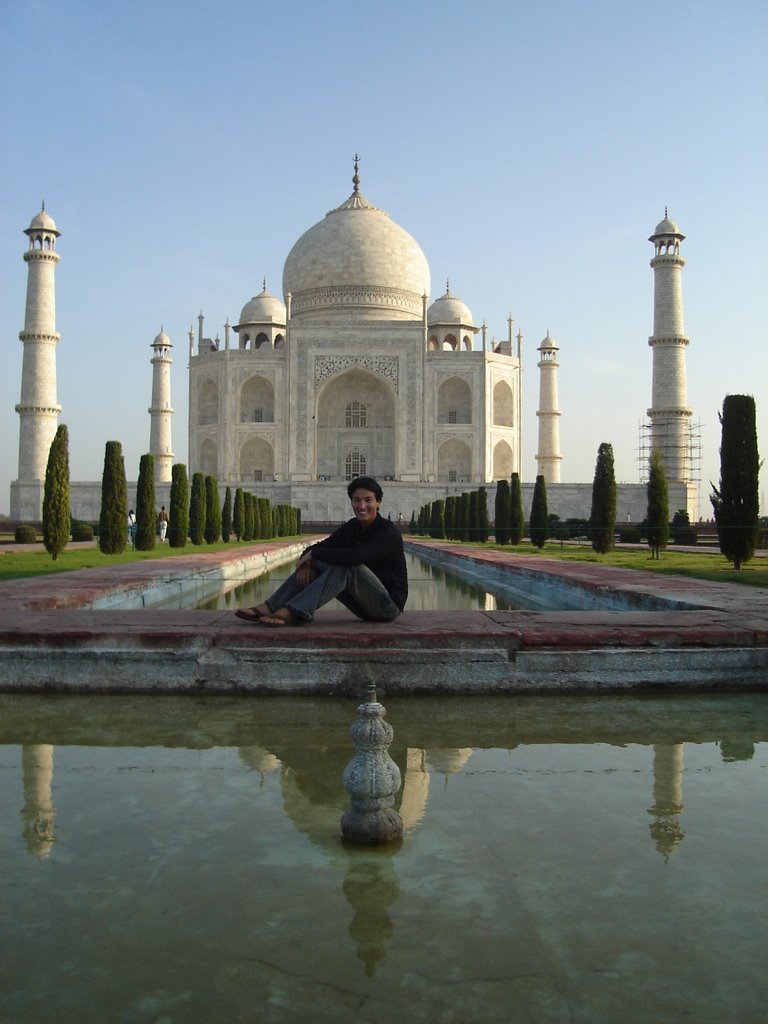
We all woke up extremely early for the second leg of our journey, from Jaipur to Agra. The drive took six hours, and the road was mostly good, but it was apparent we had reached Uttar Pradesh when the road became bumpy and filled with potholes. Uttar Pradesh has 200 million people, and is the cow belt of India. It encloses most of the Indo-Gangetic Plains, a vast, agricultural area stretching from Delhi to Calcutta. It is the heartland of Hinduism, but is also important to Muslims and Buddhists. The most famous sites of Mughal India can be seen here, exemplified by the Taj Mahal. The Mughals were a Turkish Muslim military ruling family who invaded and ruled northern India for two centuries until British rule. Gunpowder and superior military power enabled them to take over most of India. They let local kings rule over their territories, acting as a federal government, taxing these kings and amassing wealth. With this wealth they were able to build many cities and monuments, mostly in their capital cities of Agra, Fahtepur Sikri, and Delhi. We passed a highway Bharat Petroleum station where six employees waved to us to stop and get gas. Only in India would you have six people whose job it was to advertise to buy gas on the road. The turbans worn by laborers are different from Punjabi ones that are more often seen by Westerners. They seem racially offensive because it is a cloth tied around the head, but not in any particular way. On the way to Agra we stopped to view Fatehpur Sikri, which many people told me to visit in India. The royal city of Fatehpur Sikri near Agra was the seat of Akbar The Great’s government. The tolerant Akbar, the beloved Muslim ruler, was told by a holy man to construct his capital at Fatehpur Sikri. There he built a city, combining Hindu and Muslim architecture. The city was abandoned due to a lack of water, leaving the elaborate palaces, formal courtyards, reflecting pools, human-sized chess board, harems, tombs, and mosques largely intact and unspoiled. The complex was surrounded by huge sandstone walls, and had a white marble mosque with intricately-carved windows. You can pay to make an offering to the Sufi tomb, and hawkers are everywhere, selling postcards, jewelry, and marble handicrafts. We got into our hotel in Agra soon afterwards. Turns out Vijay is friends with the owner of Clarks Amer hotel. Luckily he made friends with the owner of a chain so we can stay here for a discount in both cities. I opened the curtains of my room and almost had a heart attack because a monkey was looking right at me from the window ledge. The hotel had good lunch, including a veal stew! I was shocked. We all got on the bus for the Taj Mahal. I got all dressed up in my best clothes because chances are, today I’ll be taking the photo that will be used as my Christmas Card. I made sure my hair was perfect, too. I was really excited to visit the Taj Mahal, because even people who don’t particularly enjoy touristy monuments are surprised and blown away by the beauty of the Taj. We had to offload the bus for an electric bus to minimize pollution around the building. Then we got off next to a swarm of hawkers, camels, horses, and bicycle rickshaws. The mode of transportation gets progressively smaller; what is next, a dogsled? While walking to the gate, hawkers were harassing me, so I told them I wasn’t interested in buying any jewelry, but I pointed at someone else and told them they were interested, and amazingly, they went to harass them. Usually the only thing that works is ignoring them. Indians are very optimistic people; ‘No’ means ‘Maybe’, ‘Maybe’ means ‘Yes’, and ‘Yes’ means ‘I’ll Take Two’. The Taj Mahal is the most famous example of Mughal architecture, and the most famous building in India. It is one of the Seven Wonders of the World, a World Heritage site, and timeless symbol of love. The Taj Mahal is a mausoleum built in the 17th century by Shah Jahan as a monument to his wife who died in childbirth. It is situated on the south bank of the Yamuna River, originally meant to face an equally-commanding identical black marble monument. Unfortunately, his son Aurangzeb imprisoned him and did not allow him to realize this dream. The tomb took 20,000 workers and 22 years to complete. It is covered completely with shiny white marble that changes color depending on the surrounding sky. The Taj is adorned with semi-precious stones inlaid in the white marble, and scriptures from the Koran chiseled into the façade. Immaculate gardens of grass, trees, and reflecting pools surround the tomb. These gardens allow the person buried there to ascend to heaven from heaven on earth. It is not a typical Muslim tomb, which is supposed to be located at the center of a garden. The tomb itself is completely symmetrical except for Shah Jahan’s tomb alongside his wifes’, not part of the original design. Demonstrating the beauty of the Taj, the designers placed optical illusions within the building to make it more ascetically-pleasing. Because the eye sees far-away objects as closer together and smaller, the minarets face outward (which is also beneficial in earthquakes), and the calligraphy is small at the base and gets progressively larger as it goes up the tomb. Just as impressive as the outside, the inside is covered with floral carvings and semi-precious stones inlaid by expert families. This art is extremely difficult, and the families keep the art a secret. When Hillary Clinton asked one such family the secret, they replied, “I’ll tell you when you tell me the recipe of Coca-Cola”. Sadly, the Taj has become extremely commercialized. Everyone who goes to India comes here. With a ticket you get a bottle of water and booties for your feet. I’m surprised you don’t get a free toy with your ticket. Vijay says he’s been here about sixty times so far. Good thing he gets the Indian rate of 20 Rs, compared with the foreigner price of 750 Rs, 37.5 times more expensive. Some of the Indian people tried to get in fro the Indian rate, without any luck. I thought of one way I might have been able to; pretend like I was a deaf person. For obvious reasons, security was stringent (prohibited items include electronics besides cameras, extra clothing, tripods or bipods (how a ‘bipod’ is possible is beyond me), arms, explosives, food, and cigarettes). I’m glad that security is very tight. However, I hardly see the Taj Mahal as a major terrorist target; it’s the most beautiful Muslim building in the world. While my friends continue to remind me to stay vigilant in India, I feel like the safest places for me to be during terrorist attacks are mosques. Blowing up a mosque if you’re a Muslim extremist would be like killing your own mother. Waiting in line, I got really antsy and almost peed my pants. The place was swarming with tourists. Walking through the sandstone doorway, the white marble of the Taj Mahal was visible, absolutely stunning. However cliché it sounds, this is the most beautiful building I have ever seen. Because it was sunset, the white marble was reflecting the yellow skylit color. Tourists crowded around, waiting to take pictures from the perfectly symmetrical spot in front of the reflecting pool and row of trees leading to the tomb. I obviously went trigger-happy snapping photos. I also had people take numerous photos of me. We got a guide to explain about the mausoleum, and then we took a 40-person group picture. The center of the complex has a pool and benches, the most photographed spot of the Taj Mahal. From there I went to the tomb itself, which was very intricate and the inside was the fake tomb of Shah Jahan’s wife Mumtaz Mahal, who is actually buried in the ground under the tomb. You must remove your shoes; however, you can touch the building if you want. The sun was setting over the dirty Yamuna River in back, which faced the rest of Agra, including Agra fort and a lot of farmland and power lines. The onion-dome of the Taj became purplish red, matching the color of the sunset behind it. We left the monument because it closed. I don’t think they’d like the idea of a slumber party at the Taj Mahal. Everyone was harassed by hawkers while getting on the bus. My ear is still resonating with the sound of “Friend, friend, friend, friend, friend,” etc. One kid was trying to sell postcards from outside the window, so Kelly closed it, which he opened again. Kelly closed it again, and his hand was caught in the window, so he screamed, reminding me of a bratty kid yelling at an evil babysitter. He didn’t leave, and as the bus started to move, he jumped and grabbed onto the windowsill and rid it, still trying to sell us postcards. Unfortunately I had already bought five books to send to people, because I give him an A for effort. When I got back to the hotel, Nikhil had bought swords, and we had a swordfight.

Saturday, August 26 Amber Fort, Shopping in Jaipur


Vijay was annoyed because everyone was late this morning. He complained, “I need a stick to beat everyone who’s late”, and then when Nikhil asked for the fans to be turned on, he joked, “Nikhil, you are so difficult”. We drove to Amber Fort nearby. From there, we rode elephants up the steep hill to the Amber Palace. The dark Asian elephants were dressed in colorful robes and painted with bindi and decorations. It was really fun, but the entire way we were harassed by touts on foot. Amber was the original capital, and the fort was ornately decorated with gold, mirrors, and intricate carving. The fort housed swimming pools, ancient air-conditioning systems, gardens, and fountains. The fort overlooks the city of Amber and through the green hills, Jaipur is visible. Everyone was taking group photos incessantly. From there, we passed a beautiful palace on the water, for which we didn’t get to stop because Brianna told us we could just Google it. Next we saw Jantar Mantar, medieval India’s largest observatory. It contained many sundials and astronomical tools used to calculate seasons, time, and the stars. The main sundial was so big that it was marked with ticks for minutes, and you could see the shadow moving across it. It was also completely accurate. During lunch I was embarrassed when Katie asked “What is wrong with this country? Why can’t they just have beef instead of mutton?” Why don’t we just cut up Jesus Christ and put it on a skewer and eat it? After lunch, I headed out to the Old City for shopping. Jaipur is the center for Indian handicrafts because it is here that generations of families produce their unique items. I bought a large number of camel leather, pointed-toe shoes. A tout came up to me and I got him to give me some puppets for 80 Rs. I took a bicycle rickshaw to Hawa Mahal, or Wind Palace, the major landmark of Jaipur. It is a five story sandstone building with honeycomb windows jutting out, from which royal women could inconspicuously watch the main street. I tried shopping for fine Rajasthani fabrics, which were expensive. The reason, I later learned, was that most of the fabrics were wholesaled to Delhi, so they were actually cheaper there. It’s like the Basmati Rice; the high-grade rice cannot be bought in India because it is made exclusively for export. I haggled wall hangings and Indian paintings down to 40 Rs each. I spent $40 and two hours at the painting shop.

Friday, August 25 Rajasthan, Jaipur, City Palace, Five-Star Hotel

The Golden Triangle is the Delhi-Jaipur-Agra circuit, which includes four states and quintessential North Indian tourist destinations. For us, EAP prepares the excursion for this weekend. We had to all assemble at the Study Center at 5:30 am, and we hopped on AC charter buses for Jaipur in Rajasthan. We got information sheets explaining the destinations. Talking about Jaipur’s different attractions, it read, “Pretty dolls from various countries are on display in the compound of the school for deaf and dumb children”. I was wondering why we do all our traveling by bus, when the train system is so efficient. Just imagine Vijay calling up Indian Railways, “Hi, can I make a reservation for 40 Americans please?” On the way out of Delhi, we passed the modern high-rises of Gurgaon and the rest of the cultivated flat southern Haryana plains. The Delhi-Jaipur road was well-paved and maintained. We saw a few other charter buses with tourists in them. It’s kind of weird…You’re old and rich and white, why aren’t you flying? The semi trucks are all decorated, painted with colorful motifs, pictures of Indian flags, cows, birds, lettering saying “National Carrier”, “All-India Permit”, “Use Dipper at Night”, and “Blow Horn”. We stopped several times for bathroom breaks, and it’s a funny sight to see five tourists in a line peeing on the roadside at once. We passed a gasoline truck, with the back painted Rajasthan means “Land of the Kings”, and is India’s most color-charged state. So, since I’m colorblind, can I get charged less? Rajasthan is the land of feudal kings known as Rajputs, who lived according to a strict moral code of honor. Even the British had a difficult time controlling the territory. The land is mostly rural and impoverished, but visitors are drawn here for its fairy-tale cities and colorful beauty. It was dramatic; the red dry soil against the green of the wheat fields, and the rocky hills accentuated by the yellow or red of a turban or a sari. The houses were made of mud and dung, with hay constituting the roofing. Women in bright blue and yellow saris walk on dusty paths between red-dirt fields, carrying bundles of hay on their heads. Men adorned in large white or red turbans and white draped clothing sit under trees playing cards or tending their cattle. Enormous camels pulled carts filled with people and hay. We finally got into Jaipur, a city surrounded by rugged hills crowned with forts and walls. The inner city, known as the Old City is touristy and completely painted pink. Outside, the rest of the city is the dirty working capital of Rajasthan. The hotel was nestled in a part of town filled with hospitals and office buildings. Vijay had written that “we will be staying in reasonably good hotels”. If by “reasonably good” you mean the five-star, $120 a night, Clarks Amer. And the best part is that the UC Regents are paying for the entire thing. A well-dressed doorman with a Rajasthani turban and an amazing Civil War moustache greeted and opened the door for us. We had lunch, which was extravagant and ice cream was dished up in a cube of pure fattening goodness. I had five plates of delicious food. Afterwards, we all went by bus to the Old City for sightseeing. The Old City was painted pink by the Maharaja upon Prince Edward VII’s visit, because it was his favorite color...woman. Today, everything in the walls share a dark pink color and Indian architectural style, with black and white signs leading to bazaars selling everything from fresh vegetables to Rajasthani fabrics. It’s beautiful, minus the dirty roads, power lines, and congested traffic. Camels, cows, motorcycles, rickshaws, and cars all occupy the gridded streets. The City Palace is located in the center of town, and is now a museum. It is extremely touristy, and we were greeted by a snake charmer. An entourage of hawkers harassed everyone, selling peacock fans, chess sets, postcards, and jewelry. One man even asked for money for making weird funny faces that we could photograph. The museum was ornate, ceilings inlaid with gold, made during British rule. I saw the world’s biggest silver container in the world, used by the Maharaja while he was studying in England. His mother told him that drinking the water in England would be bad for him; sounds familiar. The world’s second-largest chandelier was also housed here, as well as a vast assortment of beautiful paintings and Hindu texts. The armory housed an artistic assortment of guns, knives, and swords. My favorite display was an arrangement of weapons that spelled out “Welcome”, with a caption reading “a collection of backscratchers and daggers”. Rajasthani men in red turbans and white suits could be paid to be photographed. We saw a handicrafts emporium (Vijay probably got a huge commission for bringing us), which was extremely overpriced. We had a painter demonstrate his job, which was kept in the family for generations. He told us that he doesn’t make the squirrel-hair brushes himself because as he said, “Have you ever tried to catch a squirrel?”. I swam in the nice pool after returning home. That was short lived, because once it got dark, a horde of bats started swooping over the water at my head. I ate dinner and then headed to the bar on the rooftop, overlooking the city. It was really nice except for the weird pornographic elevator music.

Thursday, August 24 Hellish Classes, Opposites of the US, Dinner at Shrikhandes

Professor Veena Kukreja is just too boring, I’m sorry. Today she told us that South Asia faces the “Triple A’s”. A’s she identifies as ‘Awareness’, ‘Aspirations’, and ‘Identities’. I don’t understand, seriously. Ok, but seriously, who did she have to sleep with to get this job? She probably wrote her PHD dissertation on the ‘Triple A’s’. And that’s why she’s still at prestigious Delhi University. The next class was actually interesting, but since it was 85 degrees in the building I was falling asleep. She was talking about refugees who all come to India from Bangladesh, Sri Lanka, Somalia, etc. You know your country sucks when you are immigrating to India. Student elections are going on right now at Delhi University, so a bunch of students are marching around, waving banners and making noise. I prefer to spend as little time on campus as possible, so I didn’t really see anything. After that I had to wait in a long line for security. Gender trends are the opposite of in the United States; more men go to school than women here, there are more men than women here, men come first here, and in gender-specific lines mens’ lines are longer here. It’s also like the reverse of peacocks; while men wear brown, beige, and white Western clothes, women wear brightly-colored red, blue, pink, yellow, purple, green, gold saris and salwar kameez that look really good. For dinner, I took the Metro to Central Secretariat, and was picked up by Holly Shrikhande in their SUV with a driver. From there, I was taken on a tour of the President’s House and the diplomatic enclave at Chanakyapuri, with all of the embassies. Then we went to her residence, which was a guarded, nice house by Indian and American standards. It seemed like I was in their house on Mercer Island, since all of the furnishings were the same, including Anjali’s bedroom with girly lanterns, pictures, and notes, but which the grandfather now is forced to live in. We talked for a while over some cheese and crackers (heavenly), before eating an excellent dinner (salad, parantha, tandoori chicken, aloo ghobi, and dahi) made by their Maharashtran cook. Anil, Holly, Adria, the grandfather, and Jasper were all there, and it was nice to see them again. I took the Metro home to Civil Lines.

Thursday, August 24, 2006

Wednesday, August 23 Current Events, Awkward Party

I guess Paris Hilton has now at least done something to earn her fame; she just released a new album. Her thoughts are: “I, like, cry when I listen to it, it’s so good”. So along with that, she also claims to have copyrighted the term, “That’s Hot”. God I hate Paris Hilton. In other headlines, it’s a Muslim Armageddon-type day today, so there were threats of Iran bombing Israel. Also, Bush claims that Iraq is “straining the psyche of our country” and that "there's a lot of people saying `withdraw now.' They're absolutely wrong....We're not leaving, so long as I'm the president. That would be a huge mistake." This is actually infuriating. I’m sorry, but your track record is a joke. Let’s see, shall we? Bush’s approval rating has slumped to an all-time low (37%), Iraq is still in shambles and civil war, democracy has not been instituted anywhere in the Middle East, 2,600 Americans and 45,000 Iraqi civilians have died thus far, extremists have grown stronger, Iran has developed nuclear capabilities, Israel has created hostile neighbors everywhere around it, anti-American resentment in the Middle East is the highest it has ever been, and oil and gas prices have skyrocketed. And that’s just the Middle East problem. The Bush Administration has not even addressed issues that face Americans every day; say, healthcare, education, or the economy. And while abroad I hate admitting I’m from the United States, even though I love my country. Today I spent updating my blog and now Facebook has introduced “Notes”, which sync my blog on blogger to my Facebook directly and automatically. It’s awesome, and I am probably the only person who actually utilizes every feature Facebook offers. After that I ate at Fiesta (fancy that), and then went to Hindi class. Afterwards, I went out in the sweltering heat (it’s not sunny but it’s 100% humidity and about to rain) to Connaught Place. I bought some more jeans (I can actually wear these comfortably in public), and I had to get them tailored. I almost want to get them to tailor acid-wash jeans overalls. Oh, the possibilities are endless! I ate a huge meal at a South Indian restaurant, and then I walked around Palika Bazaar, where I got an mp3 CD with all the Hindi music I could possibly want. I got ready and went out in my denim shirt embroidered with parrots to Mora’s birthday surprise party, of which Ajay ruined the surprise already. It was really awkward; about two people were wasted, Bottle’s friends were there for some reason, it was sweltering, and others (including me) just wanted an excuse to leave, so I offered to walk home the girls (who were getting speakers for a dance party at our house), and I conveniently never came back.

Tuesday, August 22, 2006

Tuesday, August 22 Riding on Bus Tops Through Haryana, Dadi's Family

I woke up early with a free day. I took the Metro over to the bus station and hopped on a bus to Jind, in Haryana, which is supposed to be the heartland of the state, with rural villagers who only speak Haryanwi, not even Hindi. The ride there was ok, but I couldn’t take pictures because the lighting was bad. I got out at Jind, and started walking to go see some rural life, through the crowded, busy town. I bought four bananas from one of probably 25 banana-vendors. Walking in the 100-degree heat for 15 minutes was unbearable. My shirt was soaked, I was turning into a brown man, and my eyes burned from the dust. Some of the people looked at me funny, especially when I whipped out the camera. I remember watching a 1981 movie in Anthropology Class called Dadi’s Family, about a family of Haryana farmers led by the matriarch Dadi (meaning Mother-In-Law because a woman moves from her natal village to live with her husbands’). Anyways, I am positive I just found Dadi. She looks exactly the same but a little older, and was wearing the exact same outfit. I managed to get a picture of her. After that, I felt like I had accomplished enough for the day, so I turned back in a furious sweat, to the bus station. I saw all these uniformed schoolboys riding on the tops of buses, which looked like fun/extremely dangerous. I talked to one of the students, and a bunch of high-school kids and I jumped on top and rode the bus to Panipat, 60 km away. They all crowded around and wanted to talk to me, see where I was from, what I was doing in Jind, and how much sex I have. I was invited to one of their houses, but I was so exhausted I didn’t have the energy to try and hurdle the language barrier. Most of them got off the bus as we rode further and further to Panipat. On the way, I saw quintessential rural India; men in white kurta and turbans sitting under the shade of trees playing cards and smoking hookah, women carrying huge bundles of wheat and water pails on their heads, families being pulled on carts by water buffalo, endless plains of cultivated rice paddies, wheat fields, and sugar plantations. I passed the Panipat Thermal Energy Plant, a huge nuclear power plant, built right up against slums, rural houses, and rice fields. It was straight out of a movie, the British voice saying, “Planet Earth uses 3000 times as much energy as is being created by nature. Moreover, urbanization and rapid consumption of natural resources threaten global sustainability levels for future generations.” Panipat was a busy, dusty, sprawling, boring town, and I just wanted to get back to Delhi. I hopped on a bus and slept most of the way back. I can feel my stomach growling because of something I ate on Saturday, but nothing really bad. So far I haven’t gotten sick since Mussoorie, knock on wood. Maybe I am actually building up immunities. This could be because I haven’t drunk (I know, what’s going on?) in a month, but whatever it is I’m doing, it’s working. I ate at Fiesta again.

Monday, August 21 Indian Peoples' Questions, India is Crowded

Upon meeting Indian people, they all ask the same questions in the same order. And my answers (using Indian accent and hand gestures) are always the same. 1) What is your country? America, you know California (not really true but it’s simpler than saying Seattle which they don’t know and always confuse with Chicago, 2) What you doing in India? I am study here, in Delhi University, 3) How you find India? I like the India, people are nice, it is cheap, but now is very hot, 4) Why you come India? I am always wanting to go to the India, 5) why studying political science India, politics is crooked and you cannot get job? Yes, but I am study political science in America and want to do law or the business, I am not smart to get do engineering, and is only one semester here (but if I’m in a quiet mood I’ll just say economics because the DU economics school is very prestigious, Amartya Sen is a professor in that college), 5) how long you in India? I am staying here four months more, 6) You have girlfriends, how many you have? I have girlfriend, she is in America (it’s too hard to explain that I don’t have a girlfriend or wife, and that it’s normal to have only one girlfriend at a time), 7) You speak Hindi? I cannot, 8) What is your good name? Taylor (a blatant lie, but they end up saying Thailand if I say ‘Tyler’, if you have a weird name and go to Starbucks you know exactly what I mean), 9) You know Texas, I have Aunt there? I have not been Texas, is far from California. One thing that doesn’t surprise me because I was prepared, but what can be overwhelming at first is the fact that there are a lot of people in India. 70% of the population is rural. So, even if there are large expanses of open fields, there are still people around every corner. And the cities are all sprawling megalopoli; the largest is Mumbai at 17 million, Kolkata at 13 million, and Delhi at 12 million. People sleep on the street side by side, and share beds. People will knock into you, and not think twice about bumping shoulders or knees. Every bus, train, and plane is filled to maximum capacity. Privacy and personal space do not exist unless you are willing to pay for it. Every day your senses are bombarded with every aspect of life in India; sleeping, eating, selling, buying, cooking, celebrating, fighting, driving, smoking, spitting, urinating, and defecating. And remember, there are another billion people doing the same things that you can’t see. A positive of this is that at every turn, you can find most things you need. A helpful tip I have discovered for keeping healthy is this: No matter how thirsty or hungry you are, don’t ever eat raw foods or drink non-purified water (many times as a guest or when you become withered you will find it difficult to refuse). You’ll be compensated for three hours of satisfaction with three days of misery. Remember this: A food stand selling bananas, bread, and bottled water cannot be more than 1 km in any direction in India. These three items are all you need to survive until you find a good restaurant or hotel. Sunscreen, toilet paper, and energy bars are difficult at best to find, though.

Sunday, August 20 Haryana, Cricket, College English Tests, Signage

I woke up with pinkeye and sunburn. Shashi was playing cricket, so I talked to his friends, who just arbitrarily show up at his house. Me and Atul (funny name in English) had chai and breakfast, vegetables and curd and chapati, made by Shashi’s mother. Then Atul took me to the cricket field. I watched part of a game. How it works is it takes 15 hours for one game, played over a series of days and with multiple tea breaks. The heavily-armored batsmen are on the field two at a time, at opposite sides of a running path. The bowler throws the heavy ball and the batsman hits it on the bounce. The fielders try and catch it or stop the batsmen from running to the opposite goal. The number of scores before getting out is recorded before the other team bats. It’s complicated and seems like baseball, but not as fun. I had a sudden urge to watch a baseball game, which probably isn’t going to happen. I tried batting the cricket ball, which is hard because it’s an underhand swing and you have to hit it after the bounce. After nearly killing the catcher with a foul ball, I knocked a line drive, almost killing the bowler. They thought it was pretty funny. I sat around while the team members talked in the shade. The coach was Stephan Meloy’s Indian twin. Every shop in Nilokheri seemed to shut its doors on Sunday. Cricket is the favorite Sunday event for the young men, and sitting around playing cards seems to be a favorite with older men. Near the field, a group of Indian electrical engineering students gathered to receive their grades from the small polytechnic college. I was taken inside and shown their computer lab, a small room with typewriters and where they were building computers, which looked really old and slow. Such a juxtaposition; right next to a cricket field, sewage-filled stream, herd of water buffalo, rice and wheat fields, sits a village with an high-tech engineering polytechnic college. They all wanted to practice their English, so I used my normal accent. In order to study in the English-speaking world, everyone has to pass a test, called the International English Language Testing System, from the UK, which costs $150 and uses British (useless) English. I looked at the passages, and they were really difficult. I don’t know if I could even pass them. Example: The ____ (I narrowed it down to ‘fall’ or ‘decline’) in oil prices created a need for alternate energy sources. Are you kidding! It’s supposed to test academic, conversational, and everyday English. If a native educated English-speaker cannot determine the answer, I think that’s a little unfair. Inside the test booklet was one of their resumes to study in the West, and it was horrible. I helped him organize his resume to make it more presentable. He had put the personal information (like Father’s name and occupation which is required in India) first, when he wanted to emphasize his education. And his name was written the same size as his address. I don’t understand why they don’t teach these things in the United States or India. It’s one of the most important parts of getting a job, I’d venture to say even more important than if you know the difference between ‘fall’ and ‘decline’. I came back to Shashi’s house, where his mom cooked us rice, chapati, rajma, and curd. It was delicious. I was originally going to stay overnight tonight as well. However, I was feeling really dirty and tired, and had pinkeye, and Shashi was getting on my nerves. He was very hospitable, but he acted like he owned the town, which is unfortunately literally true, him being a landlord. He acted like a tough guy, and as if he was really popular and a pimp. It was annoying, plus the town was getting kind of boring; all I do is sit, repeat conversations, and eat. Shashi dropped me off at the bus station, where I flagged down a bus within two minutes, to Delhi. On the way, this guy spit out the window, and it got all over me. It was disgusting, but it’s worse. It happened again, and after smelling myself, I realized it was vomit. So I had a combination of pinkeye, sunburn, and dirt, dust, sweat, and vomit all over myself. On the way out of Haryana, there was a checkpoint. You were exempt of a toll if you were a VIP, meaning: 1. President of India, 2. Vice President of India, 3. Central and State Ministers, 4. Governors of States, 5. Lt Governors of Union Territories, 6. Foreign Diplomats, and 7. Government Employees. In other words, #1-6 applies to 0.0000001% of the Indian population, and then with the addition of #7, it swells this percentage to 50%. I could tell I was entering Delhi again when I saw an enormous sour-smelling landfill of trash. Oh, Delhi. I got out of the bus, and decided to go to the Tibetan Market, which was a tiny alley selling tons of knock-off Chinese designer clothing. I am going to go on a fatty shopping spree here right before I leave Delhi. I took the Metro home and got all cleaned up.